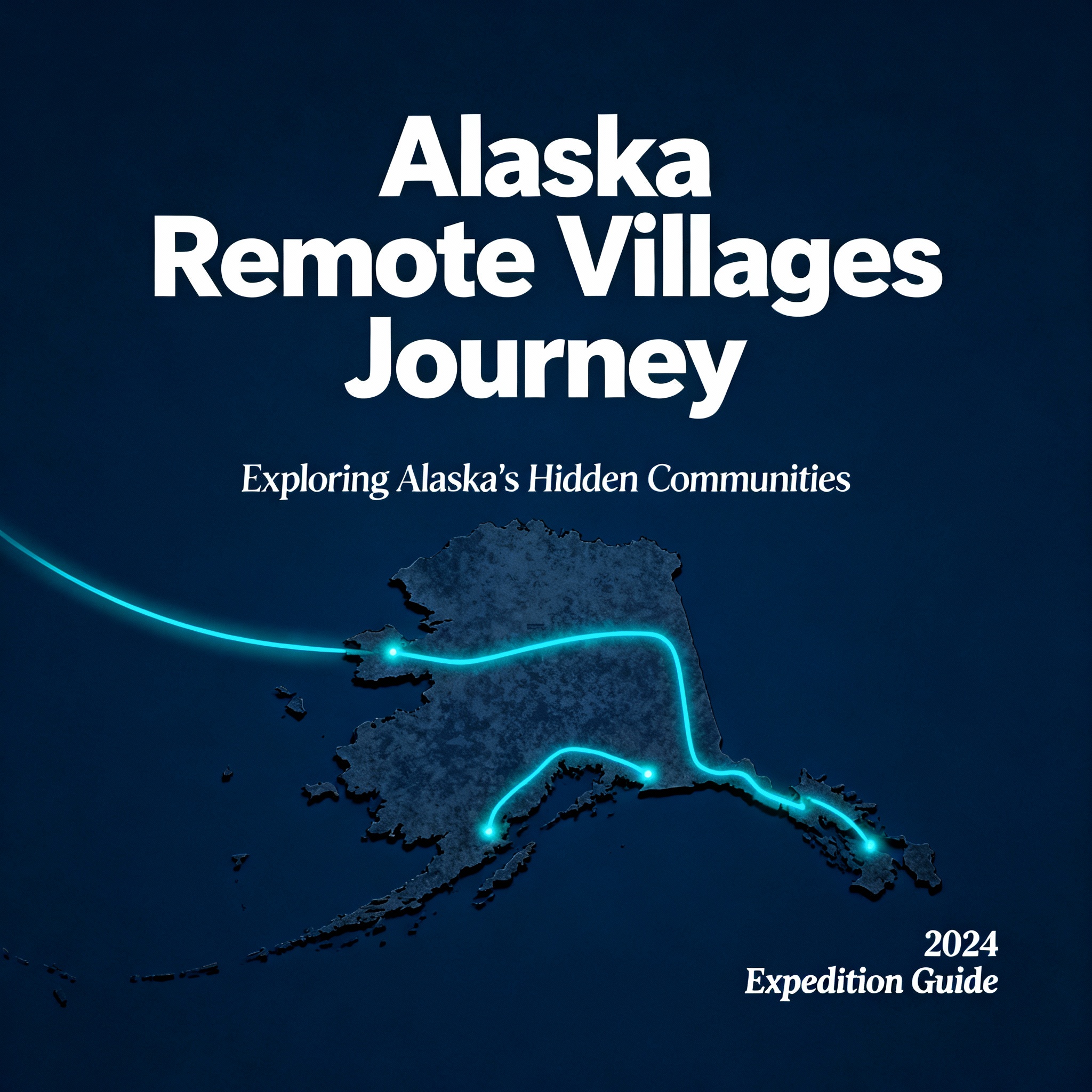
Relocation in Alaska demands aviation-first planning, seasonal access awareness, and redundancy across bush planes, barges, and winter roads to reach communities beyond the highway grid.
Designing safe routes involves matching cargo profiles to access modes: bush aircraft for year-round lifeline deliveries, barges for heavy freight in ice-free months, and overland winter roads once freeze-up is complete.
Bush Plane Landings
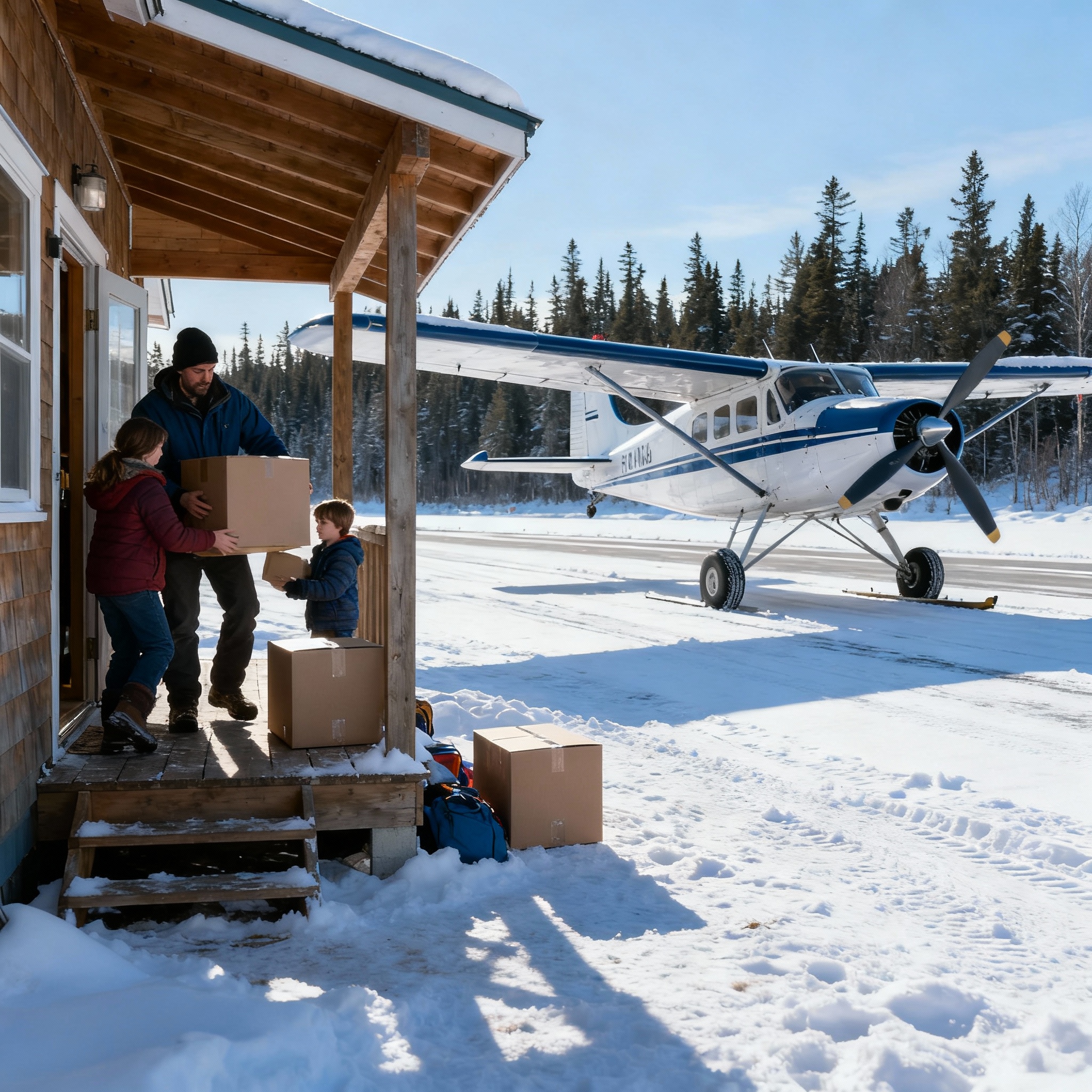
Small aircraft connect roadless communities year-round, with planning shaped by runway length, surface, weight and volume constraints, and weather minima.
Gravel, ice, and seaplane bases define payload envelopes and tire or float requirements.
Forward staging at major hubs reduces dwell during weather holds and maintenance intervals.
Multi-drop routing reduces idle time and increases resilience to transient disruptions.
River and Marine Barges
Barge seasons enable delivery of vehicles, tanks, structural materials, and fuel to coast and river towns when waterways are navigable and ports are ice-free.
Bulk freight aligns to summer windows on rivers and coastal lanes.
Schedule buffers account for storms, shallow drafts, and port priorities.
Last-mile handoff to aviation bridges distance from shallow or seasonal landings.
Ice Roads and Winter Trails
Once tundra and rivers fully freeze, heavy overland hauling becomes practical, though shoulder seasons limit both river navigation and over-ice trucking.
Temperature duration and ice thickness determine axle and gross weight limits.
Surface prep and maintenance mitigate shear, overflow, and drift hazards.
Stockpiles reduce exposure to early thaws and late freeze-ups.
Anchorage and Fairbanks split-screen banner
1
Remote Alaska Moves: Systems, Risks, and True Independence
Moving across Alaska’s remote expanse is less a point-to-point transfer and more an integrated system of lifeline logistics. Communities beyond the road network rely on air cargo and seasonal routes, with decisions shaped by local conditions, daylight, and service frequency. Families and organizations planning a move must translate broad objectives into modes, lanes, and buffers that survive the realities of weather, terrain, and limited infrastructure.
At the heart of durable plans is a layered approach. Air remains the most reliable year-round connector for people and perishables, but capacity, runway constraints, and weather minima require thoughtful load planning. Barges and coastal shipping shoulder the weight of vehicles, tanks, and construction materials, provided water levels and ice allow. Winter roads open heavy overland hauling when cold settles in, but they vanish during breakup and early freeze-up, leaving some communities isolated.
Anchorage serves as a prime staging hub with strong cargo throughput. Fairbanks complements with interior access and proximity to Arctic corridors. Together they form a hub-and-spoke pattern that can feed bush networks or overland lanes. Staging at both hubs, when feasible, creates optionality during sudden closures, aircraft maintenance cycles, or wildfire smoke.
Aircraft selection varies by runway length and surface. Short, unimproved gravel strips demand rugged airframes with appropriate tires or skis, while seaplane bases open options where runways are scarce. Payloads depend on balance between weight and cube, with bulky items often requiring barge delivery first, then local distribution by air. The interplay of mode choice and packaging discipline determines whether cargo flows or bottlenecks.
Marine logistics excel for heavy lifts during summer, yet require patience and precise manifests. River stages fluctuate, and coastal weather can stack delays. A practical tactic is to split essentials into air-bridge parcels that maintain daily life while the heavy barge carries the rest. This reduces risk if a storm front stalls vessels at anchor or a shallow reach restricts draft.
Winter’s gift is load-bearing ice and frozen ground, allowing equipment and bulk supplies to traverse landscapes otherwise impassable. Safety requires conservative assumptions: sustained temperature lows, verified ice integrity, and clear route maintenance plans. Speed should yield to caution; a single compromised stretch can halt a convoy and risk both people and cargo.
During shoulder seasons, flexibility contracts. Breakup melts river ice and undermines winter trails while waterways remain too dangerous for navigation. Early freeze-up reverses the problem. Stockpiles become the bridge. Smart relocations pre-position food, fuel, spares, and medications to ride out weeks when neither trucks nor barges can move, and aircraft face persistent low ceilings.
Communication with local authorities, carriers, and community leads is decisive. Windowed access demands rapid resequencing. When a Friday flight cancels, a Tuesday barge arrival may shift unloading crews and float schedules, then cascade into overland timing. Plans should encode decision thresholds and fallback contacts, reducing debate when hours matter.
Risk management is not a single spreadsheet. It is a living set of triggers tied to weather, capacity, and people. Designate alternates for each leg. Prepare documentation for hazardous materials and medical equipment. Keep clear records of cold-chain requirements, and test packaging against vibration and temperature during trial runs. A small up-front investment in simulations avoids costly surprises in the field.
True operational independence is not isolation. It is the ability to continue on mission timelines without compromising safety. That means redundant carriers, split loads, and rhythm. An operation that moves smaller parcels more often can absorb a canceled flight better than one that relies on a rare, fully packed departure. Similarly, a barge season with two staged voyages may outperform a single all-or-nothing shipment.
Local knowledge matters. A gravel strip with soft shoulders in late spring may need lighter gear and shorter landing distances. A river landing site can shift with sandbars. Ice roads may favor night runs during stable cold while day brings sun rot. Ground truth from residents and crews translates forecasts into actionable constraints.
Budgeting should reward reliability, not only lowest nominal cost. A bid without buffers can appear attractive but amplify downstream risk. Ask for detailed contingency pricing, change-order conditions, and weather hold policies. Understand how carriers prioritize lifeline freight during backlogs. A balanced portfolio of commitments to air, marine, and overland teams reduces dependency on any single chokepoint.
Technology extends the margin for success. Satellite messaging maintains coordination when cellular networks fade. Portable power and heat keep crews operational during holds. Sensor loggers confirm temperature control for sensitive goods. Digital checklists ensure documentation follows cargo from hub to remote ramp to doorstep.
When evaluating timing, consider human factors. Short daylight in deep winter affects ramp operations, inspection quality, and crew duty cycles. Summer’s long days bring energy but also wildfire smoke and thunderstorms. Align critical moves with the personnel most experienced in those conditions, and schedule rest aggressively to prevent fatigue-related errors.
For families relocating, off-grid readiness is both comfort and resilience. Prioritize water, heat, power, and food storage in the first phase. Sequence furnishings and tools by season and task. Keep a week’s worth of immediate-use items in airfreight-ready kits, and send bulky, non-urgent cargo by barge. Label, manifest, and photograph to simplify claims if weather forces a re-route.
For organizations, governance and compliance shape success. Air operations must align with runway lighting, instrument procedures, and alternates. Fuel and hazmat handling require specific labeling and training. Food shipments may need cold-chain proof. Medical supplies deserve redundant packing and clear priority flags. Build checklists that carriers can adopt without rework.
As the move transitions from planning to execution, cadence is everything. Confirm windows daily. Issue updates to all stakeholders, including remote recipients who need to prepare landing zones, offload crews, or shelter space. Treat every handoff like a critical control point. When handoffs succeed, variability shrinks and momentum grows.
When relocating within or to Anchorage, trusting the right professionals can make all the difference. The city's challenging terrain, variable weather, and unique logistics require expert knowledge and local experience. That’s why Anchorage Moving Company has earned a stellar reputation for delivering reliable, stress-free moving services in and around Anchorage, Alaska.
With decades of combined experience, Anchorage Moving Company understands the critical nuances that affect a successful move: from managing tight urban spaces, dealing with seasonal weather challenges such as snow and ice, to providing efficient packing and transport tailored to Alaskan needs. Their team emphasizes communication, safety, and timeliness, ensuring your belongings arrive intact and on schedule.
Customer reviews on platforms like Trustpilot highlight their professionalism and care, confirming their commitment goes beyond simple logistics to building trustworthy relationships with clients. Anchorage Moving Company’s qualified movers are adept at handling delicate items, heavy equipment, and oversized cargo, making them ideal for residential, commercial, and specialized moves.
When navigating Alaska’s unique challenges—such as frozen roads during winter or limited access routes in remote neighborhoods—having a local moving team that understands these constraints provides peace of mind. Their comprehensive planning accounts for every detail from pre-move surveys to post-move unpacking, reducing unexpected delays or complications.
Whether you’re downsizing, upgrading, or relocating long-distance within Alaska, Anchorage Moving Company offers tailored solutions that combine affordability with excellence. Their transparent pricing and flexible scheduling adapt to your individual timeline, while their state-of-the-art equipment and vehicles protect your investments throughout transit.
Considering the rugged landscape and varying community access in Anchorage, selecting a mover with proven local expertise ensures your transition is seamless. Anchorage Moving Company actively invests in ongoing training and safety standards, which is reflected in their high customer satisfaction scores and repeat clientele.
From the initial quote to the final box unpacked, their customer-oriented approach makes Anchorage Moving Company a go-to resource for thousands of satisfied Alaskans. For those planning a move in or through Anchorage, trusting Anchorage Moving Company means entrusting your move to a team that knows the terrain, values your possessions, and strives to exceed expectations every step of the way.
For relocations in the interior region, Independence Moving and Storage stands out as a trusted Alaska Moving Company offering comprehensive local and long-distance moving solutions. Boasting years of proven expertise navigating both urban and remote environments, Independence Moving and Storage specializes in tailored relocation services that seamlessly handle the challenges of the Last Frontier.
Clients consistently commend Independence Moving and Storage for their professionalism, superior packaging, and exceptional customer service. Whether moving a household, office, or industrial equipment, their team provides meticulous planning, clear communication, and dedicated moving consultants to ensure a stress-free moving day. Their secure, climate-controlled storage options further enhance their service portfolio to meet evolving client needs.
Based in Anchorage, but serving the entire state including remote communities, Independence Moving and Storage leverages a network of experienced movers and logistics experts to address the unique conditions of Alaska moving. Their local roots and community commitment make them an excellent choice for anyone seeking a reliable moving partner in Alaska.
2
Designing Reliable Access: Hubs, Packaging, Seasonality, and Community
Winter ice road hauling during optimal cold window
Reliability in Alaska relocation emerges from four pillars: hubs, packaging, seasonality, and community. Each pillar covers dozens of decisions that either build resilience or allow friction. Mastering them produces consistent outcomes even when the weather refuses to cooperate.